Hold on to your eggs because this egg in vinegar science experiment might have your kids bouncing along with these bouncy raw eggs. Kids will discover how a chemical reaction can dissolve what seems solid into something that feels more like a bouncy ball!
Watch the video, print out the instructions, then try it for yourself. Our simple scientific explanation helps kids see and feel the results of chemical reactions while learning how it works.
JUMP TO SECTION: Instructions | Video Tutorial | How it Works
Supplies Needed
- Raw Egg
- Glass or Jar
- Vinegar
Bouncy Egg Science Lab Kit – Only $5

Use our easy Bouncy Egg Science Lab Kit to grab your students’ attention without the stress of planning!
It’s everything you need to make science easy for teachers and fun for students — using inexpensive materials you probably already have in your storage closet!
Egg in Vinegar Science Experiment Instructions
Experiment Setup – Start with some observations about the egg. Explain that it is a raw egg and that that the shell is fragile and can easily be cracked. Demonstrate this with another egg. Then ask some questions. Does it seem possible that we can get the egg to bounce? Next observe the supplies for the experiment. What do you think will happen if you put the egg in vinegar? Write down your hypothesis (prediction) and then follow the steps below.

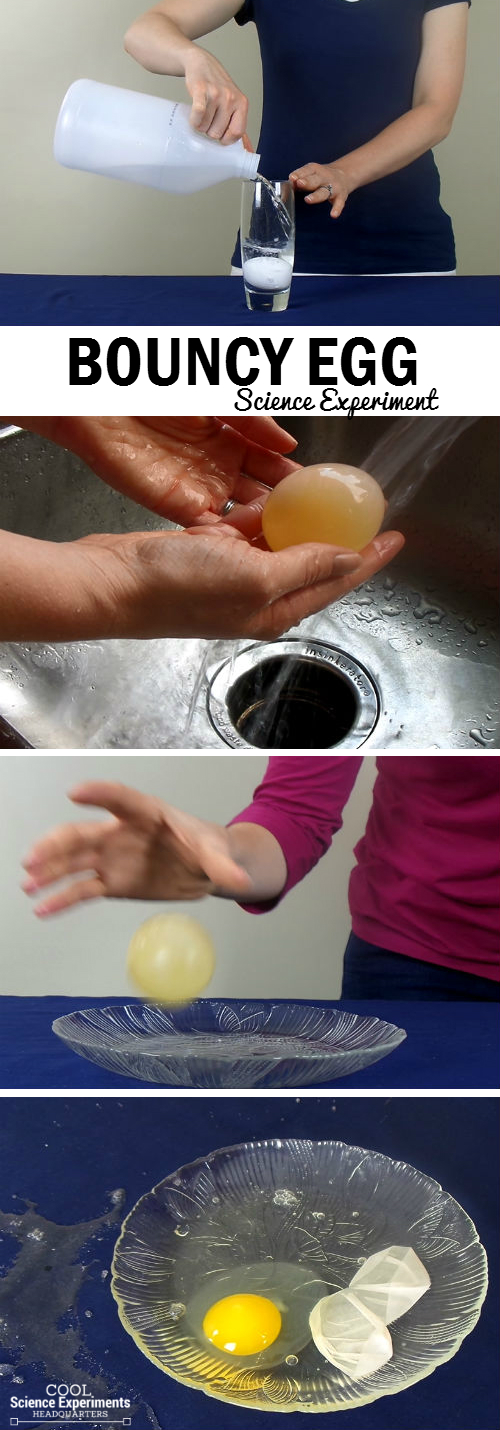
Step 1 – Get a raw egg and carefully place it into a glass or jar. Then fill the glass with white vinegar until the egg is completely submerged.
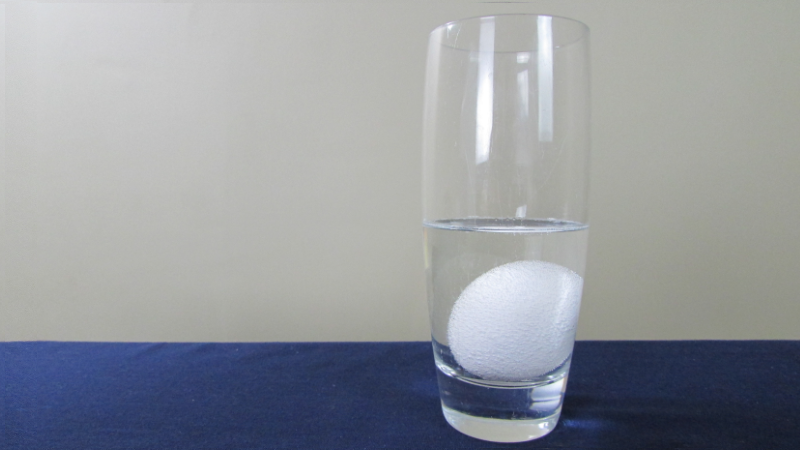
Step 2 – Leave the egg in the glass for 2-3 days. Each day, check back on the egg. Make some observations. Do you notice any changes to the egg? Is anything happening to the vinegar? Write down your observations each day. After about 3 days the egg will start to become translucent and you will know it is ready to move to step 3.
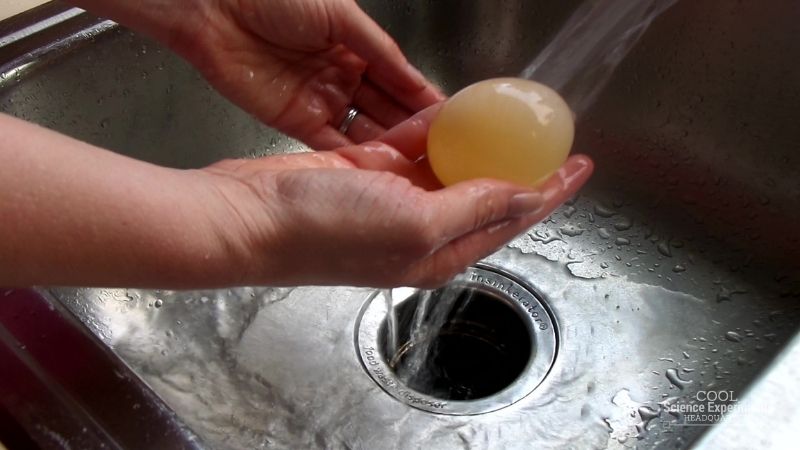
Step 3 – Carefully remove the egg from the glass and rinse it under some tap water. While rinsing the egg, gently rub the outside of the egg and the white film will come off leaving you with a translucent egg. Examine the egg and make some observations. Does the egg look different from when you started the experiment? Does the egg feel different? Perhaps you notice that it feels rubbery (like a bouncy ball). Write down your observations.
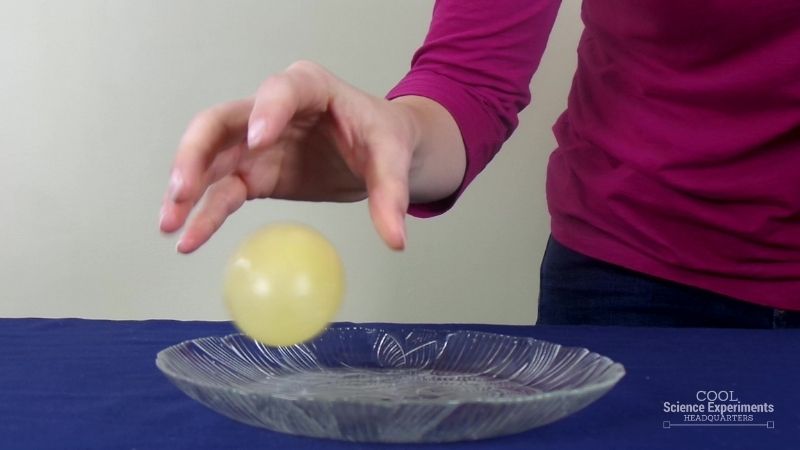
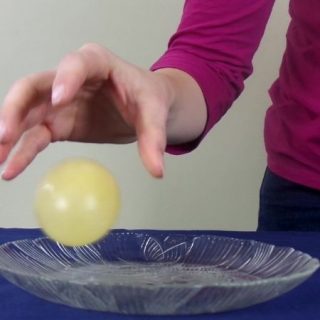
Step 4 – Over a plate or other container, lift the egg 1-2 inches in the air, let go, and watch it bounce. Make some observations. What happens to the egg? Does it bounce? Is this different than what you expected?
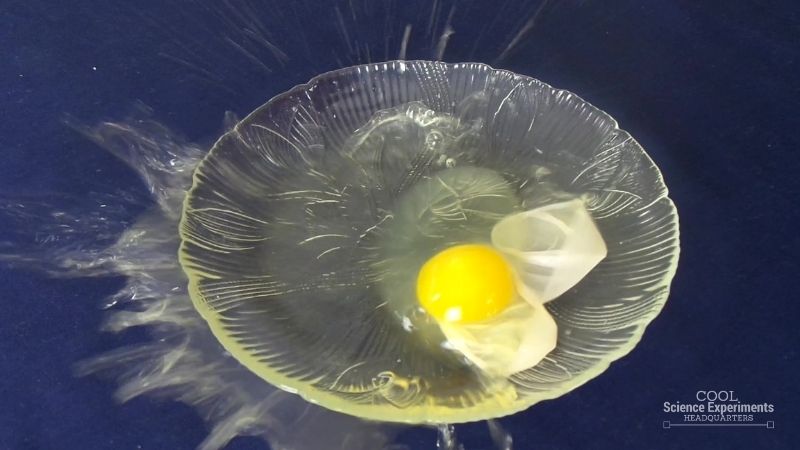
Step 5 – When you are ready for some messy fun, lift the egg a little higher in the air and let it go…SPLAT!
Wondering what caused the egg to bounce? Find out the answer in the how does this experiment work section below.
Video Tutorial
Watch the Bouncy Egg in Vinegar Science Experiment Step by Step Instructions
How Does the Bouncy Egg Science Experiment Work
The shell of a chicken egg is made mostly of a material called calcium carbonate. Vinegar is a weak acid. When the egg is placed in vinegar, the vinegar reacts with the eggshell and slowly dissolves it.
You can tell a chemical reaction is happening because small bubbles form on the outside of the egg. These bubbles are made of a gas called carbon dioxide. As the reaction continues, more and more of the shell dissolves.
After a few days, the hard shell is gone. Under the shell is a thin, flexible membrane that surrounds the egg.
The membrane allows water and some tiny molecules to pass through it. This process is called osmosis. During osmosis, water moves through the membrane and into the egg, causing it to swell and become slightly larger.
Without the hard shell, the flexible membrane allows the egg to bend. This makes the egg feel soft and bouncy. Even though it can bounce a little, the membrane is still thin and can break if the egg is dropped from too high or squeezed too hard.
Bouncy Egg Science Lab Kit – Only $5
Use our easy Bouncy Egg Science Lab Kit to grab your students’ attention without the stress of planning!
It’s everything you need to make science easy for teachers and fun for students — using inexpensive materials you probably already have in your storage closet!
Other Ideas to Try
Try other acids like lemon juice. Does it have the same effect on the eggshell? Try other types of eggs – white vs. brown shells, regular vs. organic eggs, maybe you can even find some unusual egg types at your local grocery store to experiment with (turkey, duck, quail eggs).
I hope you enjoyed the experiment. Here are some printable instructions:
Bouncy Egg Science Experiment
Materials
- Raw Egg
- Glass or Jar
- Vinegar
Instructions
- Get a raw egg and carefully place it into a glass or jar. Then fill the glass with white vinegar until the egg is completely submerged.
- Leave the egg in the glass for 2-3 days. Each day, check back on the egg. Make some observations. Do you notice any changes to the egg? Is anything happening to the vinegar? Write down your observations each day. After about 3 days the egg will start to become translucent and you will know it is ready to move to step 3.
- Carefully remove the egg from the glass and rinse it under some tap water. While rinsing the egg, gently rub the outside of the egg and the white film will come off leaving you with a translucent egg. Examine the egg and make some observations. Does the egg look different from when you started the experiment? Does the egg feel different? Perhaps you notice that it feels rubbery (like a bouncy ball). Write down your observations.
- Over a plate or other container, lift the egg 1-2 inches in the air, let go, and watch it bounce. Make some observations. What happens to the egg? Does it bounce? Is this different than what you expected?
- When you are ready for some messy fun, lift the egg a little higher in the air and let it go…SPLAT!

this website was extremely helpful
Nice ..
How long should I wait accurately to turn the egg bouncy
You need to wait at a minimum of two days before bouncing the egg.
Hi you have to wait for a maximum of 1-3 days till it bounces.
1 Day only
Ours took about 3days. But I decided to take the first egg out on day 2(it was already see through),rinse the egg, and re-submerge it in fresh vinegar.
thank you for this useful information guys. always fun to get my hands messy and do a science experiment with with reuban and max 🙂
my daughter did this for her science fair project and she left it in for 24 hours and it was perfect
We think the calicium on the egg shell dissolves with the vinegar which is an acid.
Are we correct?
This is so cool.
Thanks! It helped me a lot for my science project at school!
Can you add food colouring? ??
Yes you can, when i did this experiment in class we did food coloring and highlighter and we made glow in the dark and colored eggs.
The acid from the vinegar made the elasticity in the egg.
the eggshell combined with the vinegar and made a bouncy egg
i love bouncy egg 🙂
What percent of vinegar is used?