What does sound look like? This fun 5-item science experiment helps kids “see” sound waves and have fun while doing it.
In this article, we include a demonstration video, a supplies list, detailed printable instructions, experiment variations, and an easy to understand scientific explanation of how it works.
Bonus: Kids love this experiment because not only are they allowed to make loud drumming noises, it’s required!
JUMP TO SECTION: Instructions | Video Tutorial | How it Works
Supplies Needed
- Large Bowl
- Plastic Wrap
- 1 teaspoon Uncooked Rice
- Metal Pan (Cookie Sheets or Pans are good options, but they must be metal)
- Metal Spoon
How to See Sound Lab Kit – Only $5
Use our easy How to See Sound Science Lab Kit to grab your students’ attention without the stress of planning!
It’s everything you need to make science easy for teachers and fun for students — using inexpensive materials you probably already have in your storage closet!
How to See Sound Science Experiment Instructions

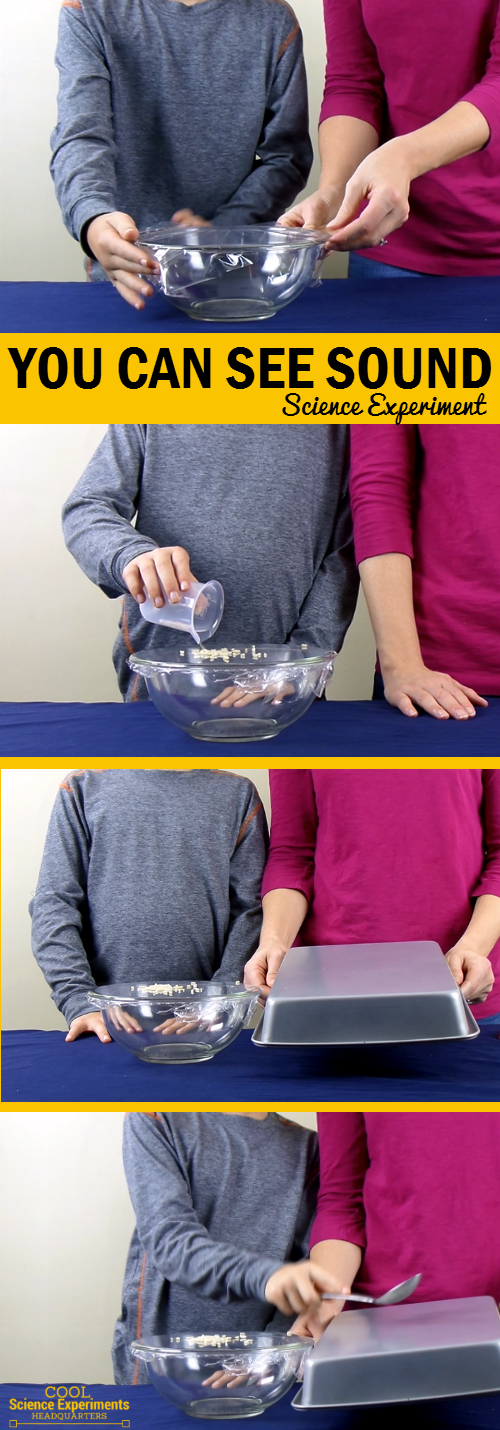
Step 1 – Tear off a piece of plastic wrap big enough to cover the top of the bowl.
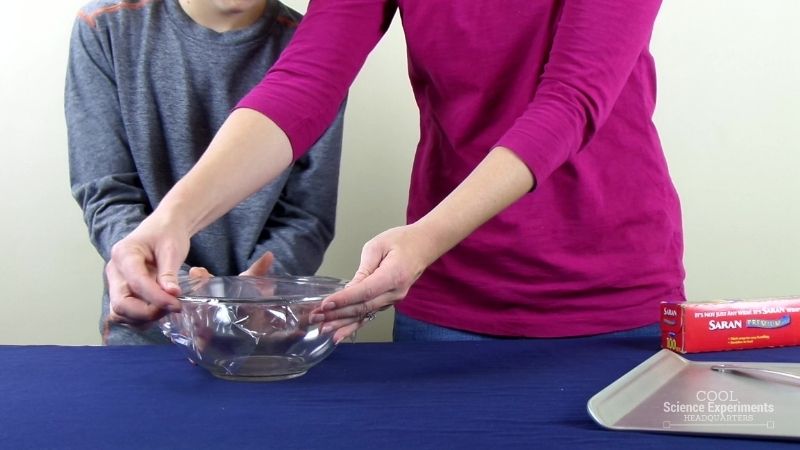
Step 2 – Secure the plastic wrap over the bowl. Make sure that the plastic wrap is very tight.

Step 3 – Pour 1 teaspoon of uncooked rice on the top of the plastic wrap.
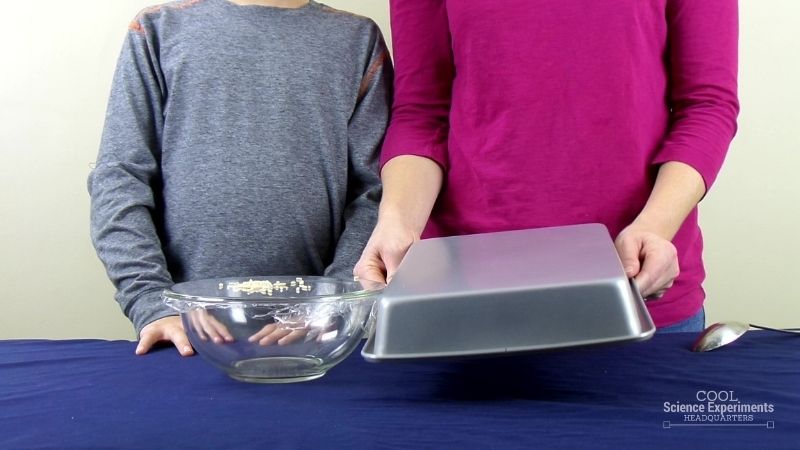
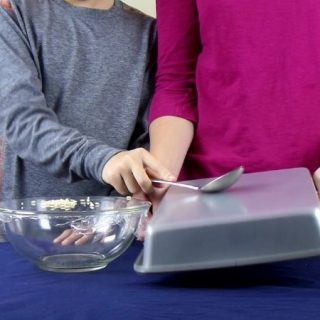
Step 4 – Hold the metal pan in the air and position it next to the bowl. What do you think will happen if you hit the pan with the spoon?
Helpful Tip: Remember, the pan must be metal or the experiment won’t work.
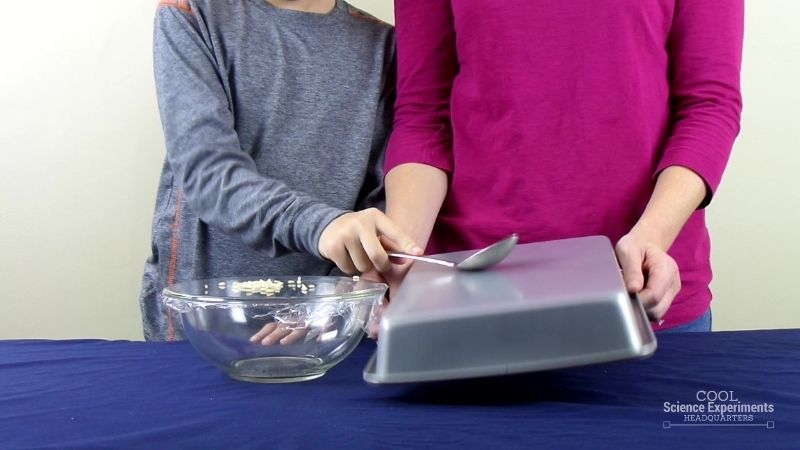
Step 5 – Take the metal spoon and bang on the metal pan like a drum and watch what happens to the rice. Write down your observations. Do you know the why the rice moved? Find out the answer in the how does this experiment work section below.
Video Tutorial
How to See Sound Science Experiment Step by Step Instructional Video
How Does the Experiment Work?
Sound is made by vibrations that travel through a medium, such as air, water, or a solid object. In this experiment, we will use vibrations to make sound waves that we can actually see!
When you hit the metal pan with the spoon, the pan vibrates. These vibrations move through the air as sound waves. The sound waves travel from the pan toward the plastic wrap.
When the sound waves reach the plastic wrap, they make the plastic wrap vibrate. The vibrations cause the rice sitting on top of the plastic wrap to move and bounce.
The sound waves traveling through the air are also what allow us to hear the sound of the spoon hitting the pan. Even though we cannot normally see sound waves, this experiment lets us see the effects of the vibrations they create!
Other Ideas to Try
Try this experiment again, but change the distance of the pan from the bowl. As you move the pan farther away from the bowl, do the sound waves have the same effect on the rice grains?
How to See Sound Lab Kit – Only $5
Use our easy How to See Sound Science Lab Kit to grab your students’ attention without the stress of planning!
It’s everything you need to make science easy for teachers and fun for students — using inexpensive materials you probably already have in your storage closet!
I hope you enjoyed the experiment. Here are some printable instructions:
How to See Sound Science Experiment
Materials
Instructions

I am trying to see the answer for the “Why can’t we see sound?” but I xan’t find it here. Can you help me, please?
Invisible sound waves
Sound is a vibration
Because when you hit the tin it makes a hard and loud noise.
This was an amazing experiment ever
It is because the rice is having potential energy while it is on the wrap. Than and only then when you hit the pan is when it turns to kinetic energy.
The sound waves bounce off the pan and travel to the drum. The drum vibrates and the rice jumps.
Why can’t I get this to work
does the type of plastic wrap matter?
it doesn’t work for me too 🙁