

Description
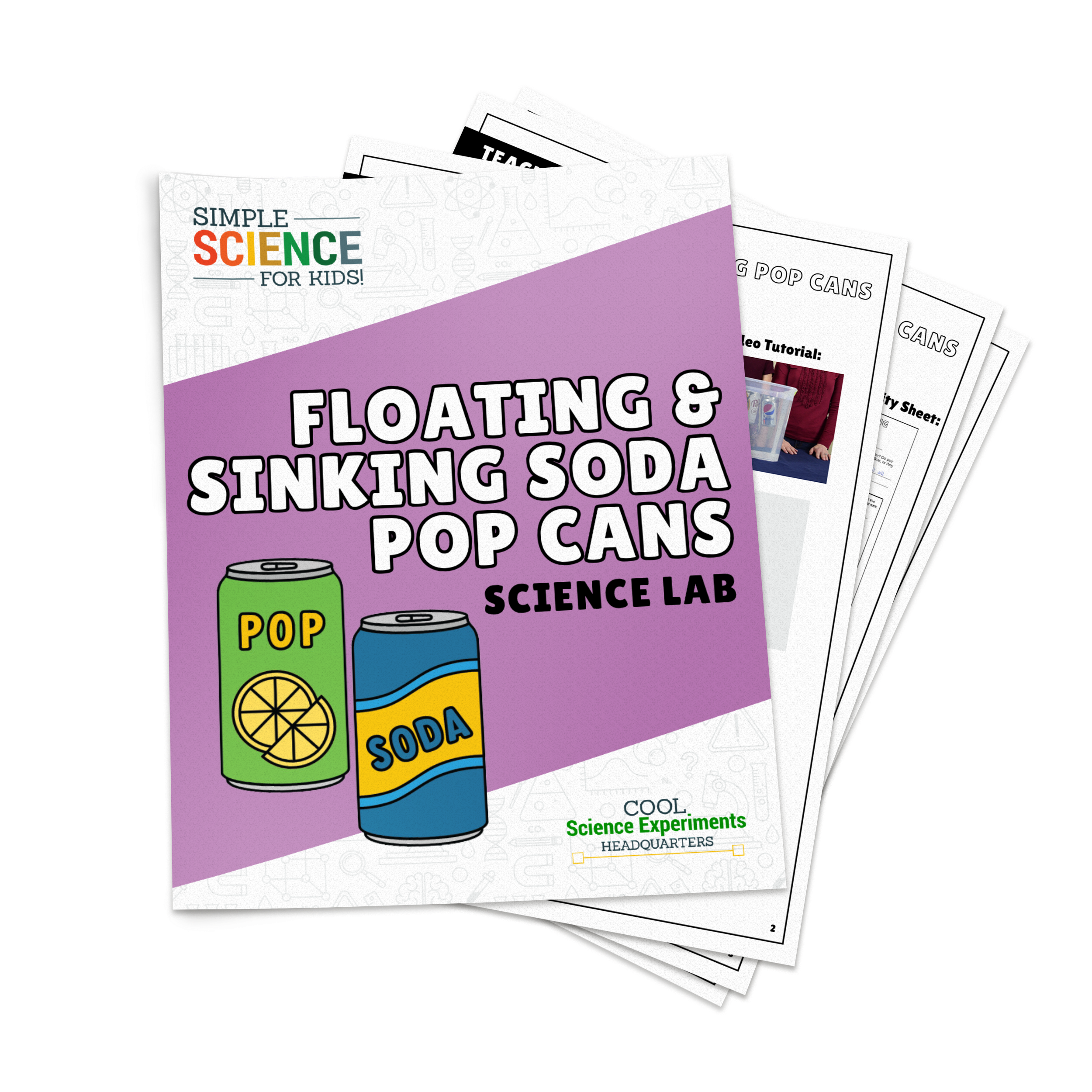
Floating & Sinking Soda Pop Cans Science Experiment | Density Lab Activity
Science Topic: Density
Why do some soda cans float while others sink? Let your students investigate this surprising question with this engaging Floating & Sinking Soda Pop Cans Science Experiment!
Students will test cans of regular and diet soda in water and make observations about whether each can floats or sinks. They’ll discover that even though the cans are the same size and shape, the liquids inside can have different densities, which affects whether the can floats or sinks.
This hands-on science investigation gives students an opportunity to make a hypothesis, conduct an experiment, observe results, record data, and draw a conclusion using the scientific method.
The best part? Students get to make a prediction before the cans go into the water, then watch their predictions play out right in front of them!
With a complete teacher guide, student lab worksheets, easy-to-understand science explanations, and multiple worksheet formats, this resource makes it easy to bring an engaging, low-prep science investigation into your classroom.
Students Will Learn About
✔ Density
✔ Floating & Sinking
✔ Properties of Matter
✔ Mass and Volume
✔ How Density Affects Floating & Sinking
✔ Scientific Method
✔ Making Predictions
✔ Observation Skills
✔ Recording Data
✔ Drawing Conclusions
Students will learn that density describes how much matter is packed into a certain amount of space. They will compare the density of regular and diet soda and observe how those differences affect whether the cans float or sink in water.
What’s Included?
Teacher Guide
- Complete lab directions
- Materials list
- Preparation tips
- Easy-to-understand science explanation
- Helpful science vocabulary
- Sample student responses
- Step-by-step instructions
- Video tutorial
Student Lab Worksheets
Students will:
- Make a hypothesis
- Predict whether each can will float or sink
- Follow step-by-step experiment directions
- Conduct the investigation
- Record their observations
- Compare the results
- Complete the scientific method
- Answer reflection questions
- Explain what happened
- Connect their observations to the science concept
Three Printable Worksheet Formats
- Full-page workbook
- Half-page horizontal
- Half-page vertical
Use the format that works best for your classroom, science notebooks, small groups, centers, or printing preferences.
Why Teachers Love These Lab Kits
⭐ Low Prep
⭐ Uses Inexpensive Materials
⭐ Uses Easy-to-Find Materials
⭐ Easy to Set Up
⭐ Printable & Ready to Use
⭐ Hands-On Learning
⭐ Easy-to-Follow Directions
⭐ Captures Students’ Attention
⭐ Makes Density Visible
⭐ Saves Time Planning
⭐ Classroom Friendly
⭐ Works for Whole Group, Small Groups, or Centers
Perfect For
- Density Units
- Properties of Matter
- Floating & Sinking Lessons
- Mass & Volume
- Physical Science
- Scientific Method Practice
- STEM Activities
- Hands-On Science
- Science Centers
- Inquiry-Based Learning
- Homeschool Science
- Early Finishers
- Substitute Plans
Grade Levels
Designed for Grades 1–3
Can easily be adapted for Kindergarten through Grade 5.
File Details
- PDF Digital Download
- 31 Pages
- Print & Go
Reviews
There are no reviews yet.