Watch out, our science volcano is about to erupt! This cool science experiment creates a fun visual and demonstrates the scientific fact that hot water rises and cold water sinks.
Gather your materials, read and print out detailed instructions, and discuss the science with our easy to understand explanation of how it works below. Continue the science fun with an introduction to the concept of hydrothermal vents.
Note: Because this experiment requires very warm water, please take caution.
JUMP TO SECTION: Instructions | Video Tutorial | How it Works | Purchase Lab Kit
Supplies Needed
- Small clear glass bottle with a narrow mouth
- Large clear contains that is at least 5 inches taller than the bottle)
- 3 ft. of String
- Food Coloring
- Hot Water
- Cold Water
Underwater Volcano Science Lab Kit – Only $5
Use our easy Underwater Volcano Science Lab Kit to grab your students’ attention without the stress of planning!
It’s everything you need to make science easy for teachers and fun for students — using inexpensive materials you probably already have in your storage closet!
Underwater Volcano Science Experiment Instructions
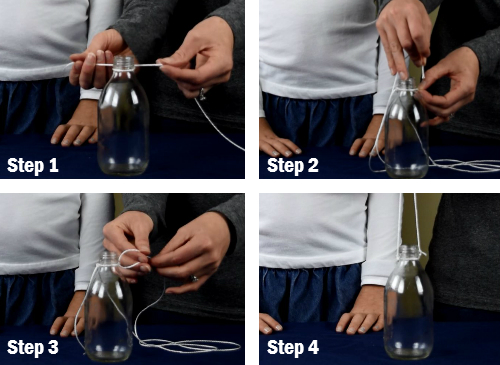
Step 1-4 – Begin with a small glass jar with a narrow mouth. Cut a long piece of string (3 ft) and tie one end around the mouth of the jar. Then thread the other end through the piece of string on the other side of the mouth of the jar. Tie that end into a knot. Ensure that both knots are tight and cut off any excess from the ends of the string.
Once you have finished, you have created a string handle that you will use to pick up and lower the jar.
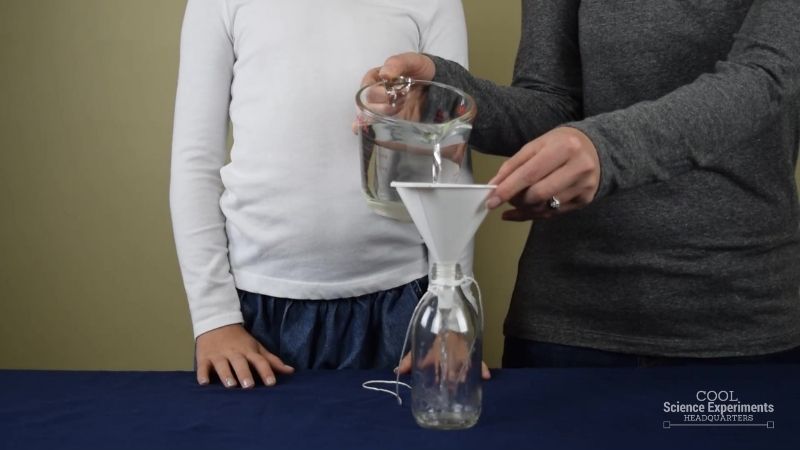
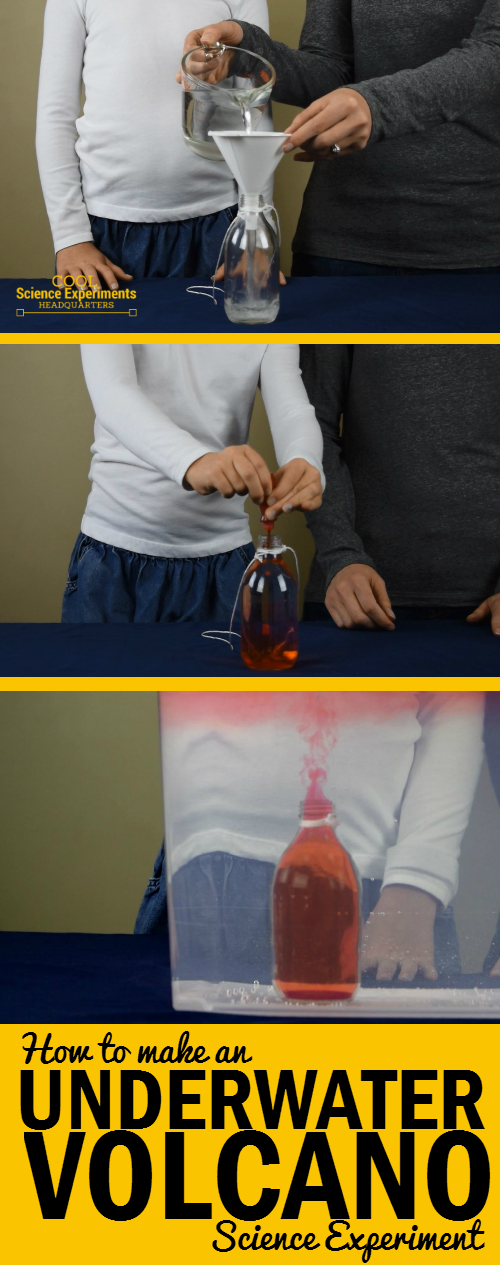
Step 5 – Next pour hot water into the jar. Use a funnel to make it easier to pour the water.
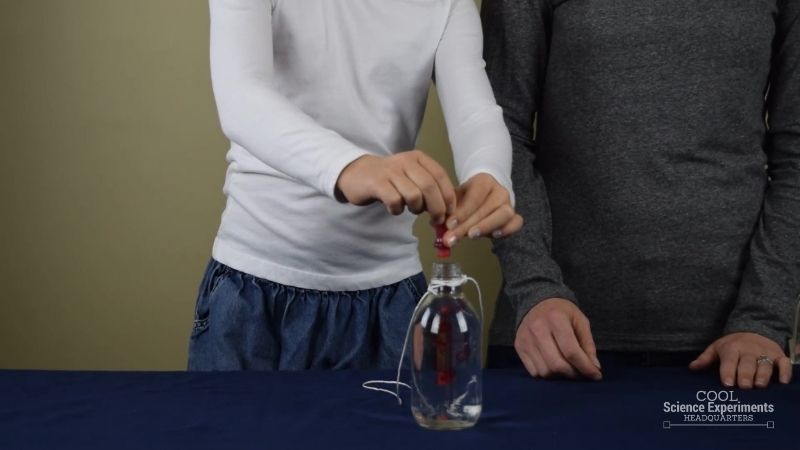
Step 6 – Add 5-10 drops of red food coloring to the jar. The water should be a dark red color.
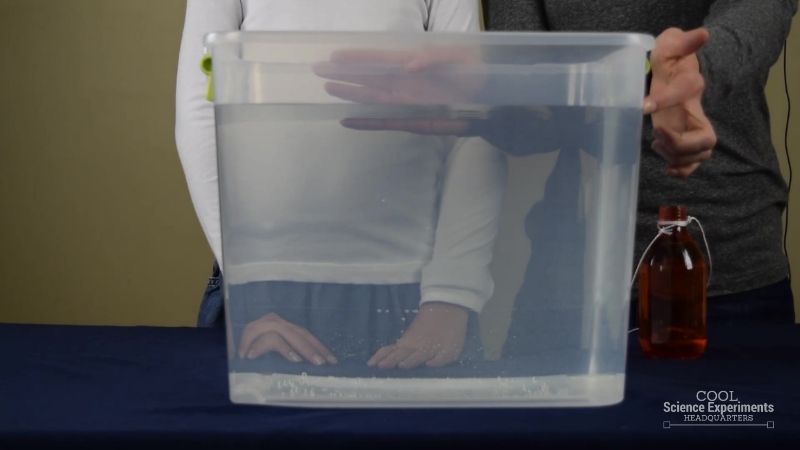
Step 7 – Next get a large clear container and fill it with cold water. The container must be taller than the bottle. For best results, the water level should be 4-5 inches higher than the top of the bottle.
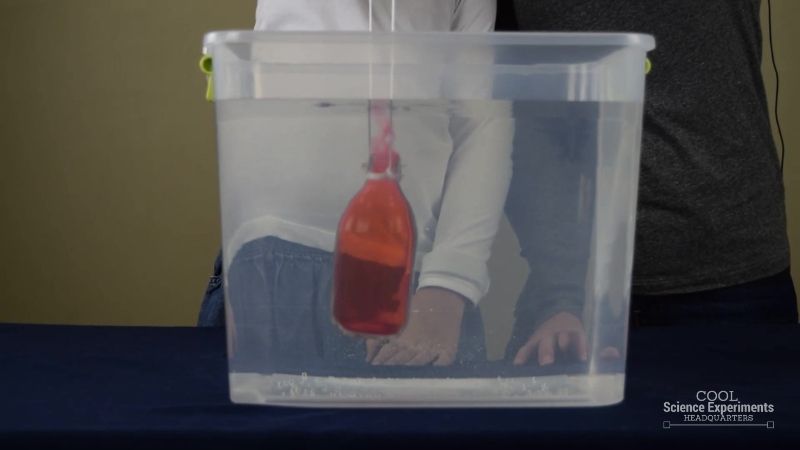
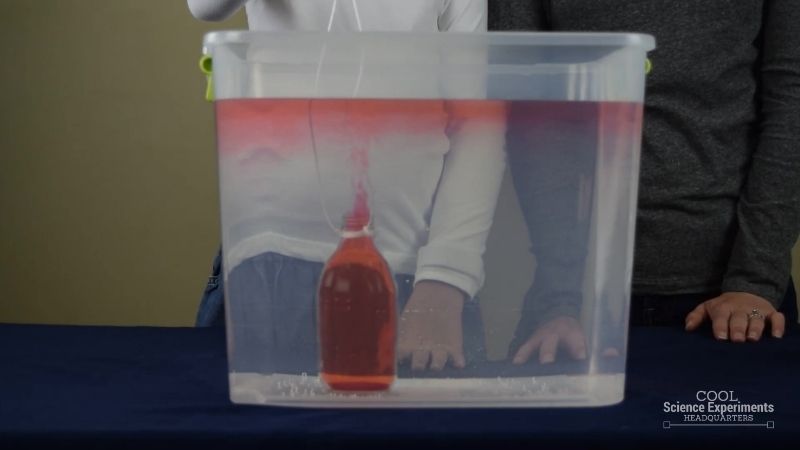
Step 8 – Carefully pick up the bottle using the string handle you created and slowly lower it into the container of water. Observe what happens next. Do you know why it looked like an underwater volcano? Find out the answer in the how does this experiment work section below.
Video Tutorial
Underwater Volcano Step by Step Instructions Video
How Does the Science Experiment Work
The underwater volcano in this experiment is created by the movement of hot and cold water. When water is heated, it expands and becomes less dense. When water is cooled, it becomes more dense.
When the bottle filled with hot red water is placed into the container of cold water, the hot water begins to rise out of the bottle. The hot water is less dense than the cold water around it, so it rises toward the top.
As the hot water rises, it spreads through the cold water and creates a swirling movement that looks like an underwater volcano erupting. The red food coloring makes the movement of the hot water easier to see.
This experiment demonstrates an important rule about fluids: less dense fluids rise, while more dense fluids sink. This movement is also happening in many places in nature.
A similar process occurs deep beneath the ocean at hydrothermal vents. Cold seawater can move down through cracks in the ocean floor and become heated by hot rock and magma beneath Earth’s crust. The heated water becomes less dense and rises back toward the ocean floor, where it can form a hydrothermal vent.
Even though our experiment does not create a real volcano or hydrothermal vent, it helps us model how differences in temperature and density can cause water to move.
Underwater Volcano Science Lab Kit – Only $5
Use our easy Underwater Volcano Science Lab Kit to grab your students’ attention without the stress of planning!
It’s everything you need to make science easy for teachers and fun for students — using inexpensive materials you probably already have in your storage closet!
More Science Fun
This experiment is a great way to introduce the concept of hydrothermal vents found on the deepest parts of the ocean floor. Hydrothermal vents are the result of seawater seeping down through fissures (cracks) in the ocean crust. The cold seawater is superheated by hot magma below the Earth’s crust and comes back to the surface to form the vents.
I hope you enjoyed the experiment. Here are some printable instructions:
Underwater Volcano Science Experiment
Materials
Instructions

Leave a Reply